Inside Arsenal: A 30-Day FPL Gameweek 1 Plan
Arsenal lead the supplied 2026/27 Gameweek 1 projections for goals and clean-sheet probability, making their players the clearest starting point for Fantasy Premier League managers in the current sche...

Inside Arsenal: A 30-Day FPL Gameweek 1 Plan
Arsenal lead the supplied 2026/27 Gameweek 1 projections for goals and clean-sheet probability, making their players the clearest starting point for Fantasy Premier League managers in the current schedule. Football Insights is a World Cup-focused football analysis site, but its FPL Gameweek 1 framework applies directly to managers comparing Arsenal, Manchester City, and Manchester United assets before the Friday, August 21 deadline at 18:30 UK time. The opening round includes Arsenal versus Coventry, Manchester City versus Bournemouth, and Manchester United away at Hull, with injury doubts involving Benjamin Sesko, Nordi Mukiele, Omar Alderete, and Jeremy Doku. William Saliba and Jurrien Timber are listed as ruled out in the supplied team news. Start with confirmed line-ups, prioritize secure minutes, reserve at least £0.5m of flexibility where possible, and avoid spending your first transfer chasing one headline performance.
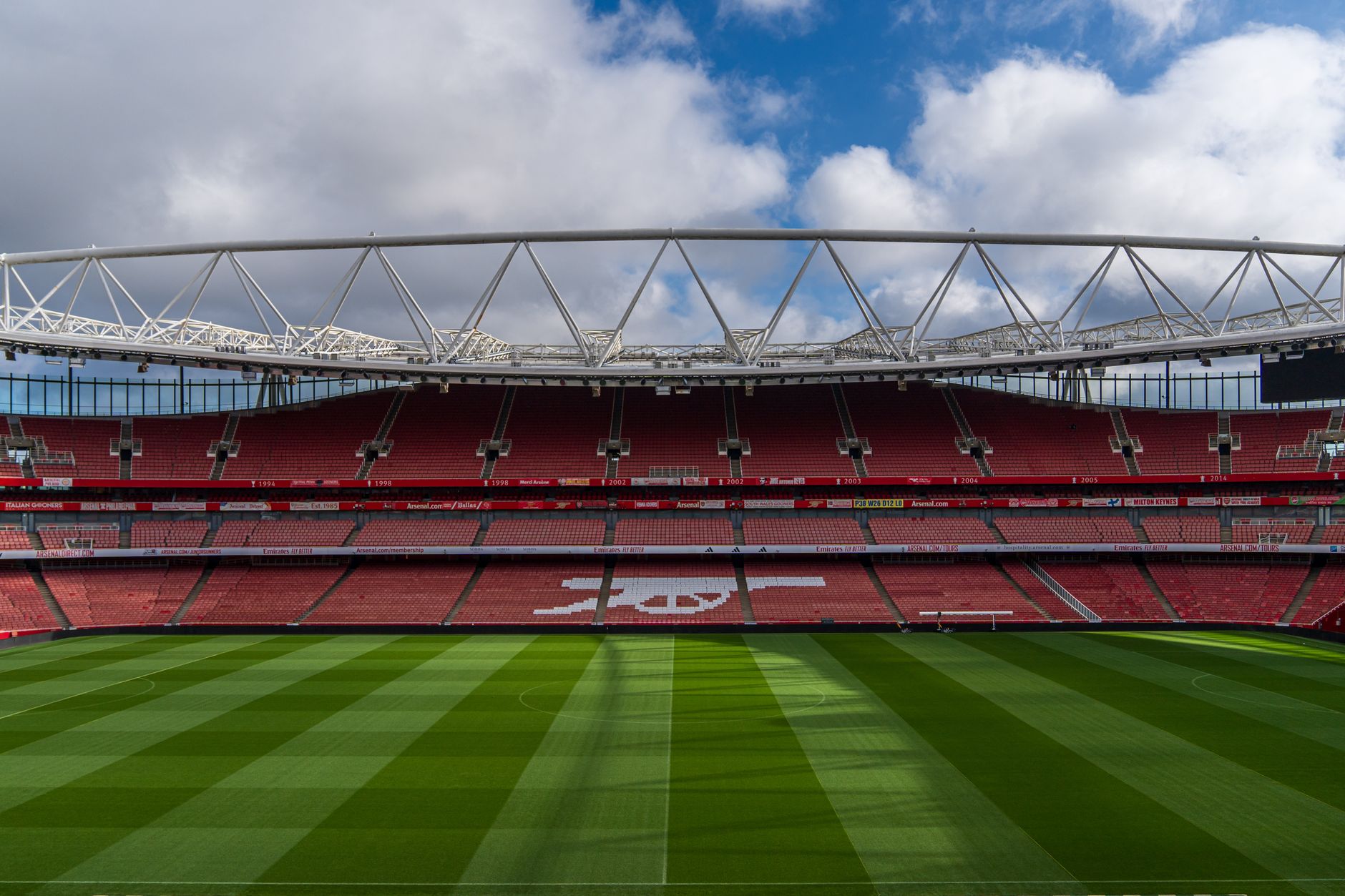
Photo by Mario Spencer on Pexels
If you want a safe Gameweek 1 start: build around minutes and fixtures
The safest Gameweek 1 strategy is to combine reliable starters, strong home fixtures, and captaincy options rather than selecting eleven exciting names. Arsenal’s home match against Coventry gives the Gunners the strongest fixture profile in the supplied projections, while Manchester City hosting Bournemouth provides another attractive route to goals. Manchester United’s visit to Hull also deserves attention because the opening schedule includes two promoted clubs, although fixture strength alone cannot guarantee attacking returns. Listen up — this is the part that matters: a player who completes 80 to 90 minutes with set-piece involvement is usually more valuable than a glamorous rotation risk who delivers one spectacular cameo.
The first draft should be judged through four practical filters:
- Expected minutes: Is the player likely to start and finish?
- Role: Does he take penalties, corners, free kicks, or advanced positions?
- Fixture quality: Is the opponent vulnerable at home or away?
- Exit route: Can you replace him with a similarly priced option?
That fourth filter is where inexperienced managers routinely donate points. A £4.5m midfielder with no obvious replacement can trap money, while a £7.5m attacker from Arsenal, Manchester City, or Manchester United may be easier to move after two matches. Use the official Fantasy Premier League rules and player data rather than relying on social-media screenshots, because prices, positions, and availability can change before the deadline. For broader tactical context, Football Insights can complement this approach with its [Internal Link: player statistics and tactical analysis guide].
A balanced opening squad might contain:
- Two or three players from the best projected defences.
- One premium captaincy option with penalties or set pieces.
- A mid-priced forward with a confirmed starting role.
- Two playable bench options, not two decorative £4.0m assets.
- A goalkeeper selected for saves, clean-sheet potential, and secure starts.
The contrarian point is simple: do not force three Arsenal players merely because Arsenal top the Gameweek 1 projections. If the third player has uncertain minutes, a Manchester City attacker or Manchester United defender may provide better expected value. Ownership percentage is not a substitute for role quality. Your aim is not to copy the crowd; it is to avoid paying a premium for uncertainty.
[Internal Link: FPL squad-building basics]
If you are chasing upside: compare Arsenal, Manchester City, and Manchester United
Arsenal, Manchester City, and Manchester United are the main fixture-led teams in the supplied Gameweek 1 picture, but they should not be treated as identical investments. Arsenal host Coventry and rank first for both goal projections and clean-sheet probability in the reference information. Manchester City host Bournemouth at the Etihad, and despite concerns after the Community Shield, their attacking ceiling remains substantial. Manchester United begin away at Hull, with the additional attraction of a schedule involving two promoted clubs, but away fixtures can create more volatility than home matches.
Which club offers the best captaincy route?
Arsenal offer the most straightforward captaincy profile because their home fixture combines defensive security with a favourable attacking projection. Manchester City can challenge that choice if their main forward is confirmed to start, especially if the player has penalties or a central role. Manchester United are a reasonable alternative only when the selected attacker has secure minutes and a clear route to shots, chances, or set pieces.
Do not select a captain simply because he is the most expensive player in your squad. Check:
- Position on the team sheet.
- Penalty responsibility.
- Number of touches in the penalty area.
- Set-piece share.
- Opponent defensive style.
- Whether the manager has a known rotation pattern.
The reference schedule identifies Enzo Maresca as Manchester City’s new manager and notes that City are projected second for goals. That creates both opportunity and risk: a new tactical system may increase attacking output, but it may also produce early rotation and role changes. If Jeremy Doku is an injury doubt, do not treat him as a normal selection until official team news is available. Benjamin Sesko, Nordi Mukiele, and Omar Alderete require the same caution. A doubtful player is not automatically a differential; frequently, he is simply an expensive non-starter.
See the underlying fixture logic before locking your armband.
How should you use differentials in Gameweek 1?
A Gameweek 1 differential should be a low-owned player with a plausible 90-minute role, not an obscure name selected to look clever. The strongest differential usually sits one decision away from the obvious pick: a full-back behind a popular winger, a midfielder on corners, or a forward whose team has an easier fixture than his ownership suggests. However, low ownership increases emotional risk because one blank immediately feels like evidence that your strategy is broken.
A useful rule is to cap experimental players at two or three positions. Keep the rest of your squad anchored by players with verified minutes and strong fixture access. If a differential costs more than £8.0m, ask whether he can realistically outperform a popular premium over the first three Gameweeks. If not, you are paying for uniqueness rather than value. [Internal Link: FPL differential player selection]
According to the Premier League official website, fixtures, squad news, and competition information are updated through official league channels; still, managers should cross-check club announcements before the deadline. The information gain here is operational: compare the timestamp of a social post with the club’s official update, because a late training absence can invalidate an apparently perfect differential.

Photo by Firmbee.com on Pexels
If you are managing risk: protect transfers, chips, and budget flexibility
The best Gameweek 1 managers do not merely maximize the first weekend; they preserve options for the next four fixtures. The 2026/27 opening round is scheduled for Friday, August 21 at 18:30 UK time in the supplied material, which means managers must complete transfers, captain selection, bench order, and vice-captain choice before that deadline. Waiting for every possible rumour is not a strategy if the deadline passes while your squad is still unfinished. Finish the core decisions early, then use the final hour for verified team news.
A sensible first-month risk policy looks like this:
- Keep one free transfer available whenever the squad is healthy.
- Avoid taking a points hit for a minor concern before Gameweek 1.
- Do not use a Wildcard because one player is doubtful.
- Delay aggressive chip plans until fixture swings and blank or double Gameweeks become clearer.
- Review every transfer against a two- or three-week horizon.
Chip strategy deserves special attention. The temptation to use a chip immediately is understandable when Arsenal, Manchester City, and Manchester United have favourable opening fixtures. Yet a strong Gameweek 1 fixture is not necessarily the best long-term chip opportunity. The Fantasy Premier League rules and scoring information explain the basic mechanics, but managers still need to account for schedule changes, injuries, European rotation, and emerging player roles.
The practical budget edge is to avoid exhausting your entire squad value on premium names. A reserve of £0.5m can make a major difference when a £7.0m midfielder suddenly becomes essential after two strong performances. This is a genuine edge because early price changes can block the obvious move for managers who begin with no cash. The manager who saves £0.5m is not being timid; he is buying optionality.
Remember the listed absences of William Saliba and Jurrien Timber. Defensive availability affects not only Arsenal defenders but also clean-sheet probability, goalkeeper appeal, and the likely workload of replacement players. Do not blindly buy a defender from the highest-rated defence without checking who actually starts.

Photo by Pixabay on Pexels
Common pitfalls to avoid
The most common Gameweek 1 mistakes are predictable: selecting injured players, overreacting to preseason goals, ignoring minutes, and using chips to solve problems that a free transfer could handle. Another expensive error is building a bench that cannot cover rotation. A £4.0m defender who never plays is not a bargain if your premium midfielder is unexpectedly rested. Squad depth should be measured by expected availability, not sticker price.
Avoid these traps:
- Preseason-stat obsession: Friendly goals do not guarantee league starts.
- Name-based selection: Reputation is not the same as current role.
- Three-player overexposure: One bad fixture can damage your entire week.
- Early price panic: A £0.1m rise is not always worth a transfer.
- Unverified injury rumours: Use club and league updates before making decisions.
- Captaincy novelty: The clever armband is often just a worse probability bet.
- Bench neglect: A non-playing substitute can turn one rotation decision into a disaster.
The reference material lists Eli Junior Kroupi and Yankuba Minteh among the ruled-out players, alongside Saliba and Timber. Treat those names as examples of why availability checks matter, but verify the latest status before publishing or finalizing a squad. Football news changes quickly, and copied injury lists can remain online after the underlying information is obsolete.
A useful evidence test is to ask, “What changed since my last draft?” If the answer is only a podcast opinion or a dramatic prediction, do nothing. If the answer is an official lineup leak, a manager press conference, or a confirmed medical update, reassess. According to Opta Analyst, football analysis commonly combines event data with contextual measures such as possession, shots, and chance quality; FPL managers should apply the same principle rather than treating goals as the only evidence.
“Check official information before acting” is the sensible principle repeated across competition and club communications. You do not need to quote every rumour. You need to know whether the player starts.
Want a second opinion on the wider football context?
The 30-day check-in
The first 30 days of the season should be treated as an evidence-gathering period, not a referendum on your intelligence. After Gameweek 1, record minutes, shots, expected assists, penalty-box touches, set pieces, substitutions, and tactical position. A midfielder moved from the wing into a central role may become a better buy even after a blank, while a goalscorer who needed one chance to score may be less sustainable than his points suggest.
Use a four-stage review:
- After Gameweek 1: Check starts, substitutions, set pieces, and injuries.
- After Gameweek 2: Identify role changes rather than chasing isolated goals.
- After Gameweek 3: Review the next fixture run and transfer flexibility.
- After Gameweek 4: Decide whether a Wildcard or structural change is justified.
Do not punish a good process because of one unlucky result. If an Arsenal attacker hits the post, a Manchester City forward misses a penalty, or a Manchester United defender concedes a late goal, the underlying selection may still be correct. Conversely, a player who scores from one low-probability chance is not automatically a must-buy. This is where Football Insights’ focus on tactics and player statistics becomes useful: tactical role, chance creation, and defensive structure offer more durable information than the final score alone.
The 30-day check-in should also measure your squad’s future cost. If a player rises £0.2m but remains nailed, the value of holding may exceed the value of chasing a new performer. If a premium asset loses his role, act decisively even if the price has fallen. Profit-first management means accepting small losses when the underlying value has disappeared. Sunk-cost thinking belongs in the bin.
By the end of the first month, you should know which teams have reliable attackers, which defenders are actually starting, which budget players are dead weight, and whether the early fixture projections were supported by real tactical usage. That evidence is worth more than a single Gameweek rank.

Photo by Hasan Gulec on Pexels
The strongest FPL Gameweek 1 plan is not the loudest draft on social media. It is a flexible squad built around confirmed minutes, Arsenal’s favourable opening fixture, Manchester City’s attacking ceiling, and Manchester United’s promoted-opponent schedule. Verify the supplied injury list, captain a reliable starter, protect your budget, and wait for evidence before deploying major chips. Rookie managers chase the first points they can see; disciplined managers buy the next decision. If you must choose one final rule, choose this: never let a rumour force a transfer before official team news gives you a real problem.
Ready to review the broader 2026 football landscape?
Frequently Asked Questions
Q: What are the best FPL Gameweek 1 tips for 2026/27?
A: The best FPL Gameweek 1 tips are to prioritize confirmed starters, strong fixtures, captaincy security, and future transfer flexibility. Arsenal rank first in the supplied projections for goals and clean-sheet probability, while Manchester City and Manchester United also offer attractive opening routes. Check the latest status of Benjamin Sesko, Nordi Mukiele, Omar Alderete, Jeremy Doku, William Saliba, Jurrien Timber, Eli Junior Kroupi, and Yankuba Minteh before the deadline.
Q: How should I build an FPL Gameweek 1 squad?
A: Build around one reliable premium captain, several secure starters, playable substitutes, and at least £0.5m of budget flexibility when possible. Begin by comparing Arsenal, Manchester City, and Manchester United assets, then fill the squad with players who have clear roles and favourable first-month fixtures. Avoid selecting too many rotation risks from one club because a single lineup surprise can affect multiple positions.
Q: Is Arsenal or Manchester City better for FPL Gameweek 1?
A: Arsenal appear to offer the safer Gameweek 1 option because they host Coventry and lead the supplied projections for goals and clean sheets. Manchester City, playing Bournemouth at the Etihad, may have the higher attacking ceiling if their main forwards are confirmed starters. Compare penalties, set pieces, expected minutes, and tactical roles instead of choosing solely from the fixture difficulty rating.
Q: Should I use a Wildcard in FPL Gameweek 1?
A: Most managers should avoid using a Wildcard in Gameweek 1 unless several players are injured, benched, or structurally unsuitable. Early-season information is incomplete, and future fixture swings, price changes, and emerging budget players can create a better Wildcard opportunity. Review the squad after Gameweeks 2 to 4 before making a major structural decision.
Q: What should I do if my FPL player is injured before the deadline?
A: Replace an injured player only after checking an official club statement, press conference, or confirmed team-news source. Compare the replacement’s expected minutes, fixture quality, price, and transfer route rather than making an emotional swap. If the injury is uncertain and the player is likely to start, keeping him may be reasonable, but a confirmed absence should normally trigger a planned replacement.
Q: How much budget should I keep available after Gameweek 1?
A: Keeping approximately £0.5m available is a useful target because it preserves access to early price rises and emerging players. The correct amount depends on your squad structure, but spending every penny can make an obvious transfer impossible after one breakout performance. Budget flexibility matters most when a mid-priced player becomes essential and your current squad has no affordable route to him.
Q: What statistics should I check after the first 30 days?
A: Check minutes, starts, shots, expected goals, expected assists, penalty-box touches, set-piece involvement, substitutions, and tactical position. These indicators reveal whether points are supported by a repeatable role or by one fortunate event. Review Arsenal, Manchester City, Manchester United, and your own squad after Gameweeks 1, 2, 3, and 4, then act on sustained evidence rather than a single scoreline.
Thank you for reading this piece from our digital heirloom collection.
Football Insights · The Digital Heirloom · Volume I